People generally schedule a first aid course after something has shaken them. A scare with a child. A colleague falling down at the workplace. A tale on the information that is a little also easy to think of in your home or in the office.
Then real life hinders. Job, youngsters, travelling, lineups. The idea of spending a full day or 2 in a class for first aid training silently falls the list.
That gap between excellent objectives and sensible truth is exactly where fast first aid courses, express first aid training, and fast CPR courses have expanded. Succeeded, they provide individuals the necessary skills to act in an emergency, in a fraction of the time of standard programs. Done badly, they create an incorrect feeling of self-confidence without sufficient depth.
The difference between the two is not good luck. It is design.
What "fast" actually implies in first aid and CPR training
When individuals search for a "fast first aid course near me" or "express cpr course", they generally have 3 restraints: time, benefit, and a requirement for a valid first aid certificate. Providers react with styles that press face-to-face time without reducing the called for content.
Fast first aid training usually attains this in several means:
Pre course online finding out that covers theory. Shorter, focused in‑person sessions for functional skills. Smarter organizing, such as evenings, weekend breaks, or split sessions. Streamlined assessment systems that avoid downtime in class.A standard first aid and CPR course that once took a full day or more can usually be completed in a half day on site, with 2 to 4 hours of online job done in advance. Express first aid courses press also harder on that model, aiming to get participants assessed and accredited in the fastest sensible timeframe.
From a regulative viewpoint, this serves as long as:
- total knowing and method time still satisfies the expertise requirements assessments are robust practical components, like chest compressions or bandaging, are completed personally and observed
Where shortcuts sneak in is when service providers attempt to reduce not only seat time however general understanding time. That is when speed quits serving safety.
Why speed matters, and when it does not
Over the years I have trained white-collar worker, childcare personnel, lifeguards, building and construction staffs, and moms and dads. Different teams really feel the pressure of time in various ways.
A childcare centre attempting to roster a whole team via an express child care first aid course can not just shut for a day. Turning team through a fast first aid course that works on a weekend break or evening makes the difference in between conformity and consistent stress.
Similarly, a business with shift workers may find it much easier to set up brief express cpr training sessions back‑to‑back, rather than one lengthy course that clashes with production schedules.
Speed issues in at the very least three useful ways.
First, it lowers the barrier to entry. Someone is most likely to complete first aid and cpr training classes that fit into half a day of leave, rather than a full day plus travel.
Second, it sustains organisations with high turnover. Hospitality, retail, and some healthcare functions have continuous team changes. Fast certification formats allow brand-new staff earn a first aid certificate or complete a fast cpr correspondence course without waiting months for a full‑day program.
Third, quicker courses are usually much more focused. With theory took care of online, classroom time can be nearly completely hands‑on: CPR training on manikins, practicing recovery settings, dealing with choking, and practicing scenarios like seizures or severe bleeding.
Where speed does not issue remains in the discovering process of the human being in front of you. The heart of first aid training is not the slide deck or the ticking of a conformity box, it is obtaining someone to the point where they can get over adrenaline, remember the actions, and devote to acting.
That takes repeating, discussion, and a chance to make mistakes in a secure environment. The best fast first aid courses style for that, instead of disregarding it.
How fast first aid courses are structured
Different service providers bundle points differently, yet the majority of fast first aid course formats share a couple of features.
Usually, an enrollee gets on the internet access to pre‑course products. This might be a mix of analysis, brief video clips, and test questions. For a combined first aid and cpr course, that on the internet element commonly covers:
- basic makeup and physiology the DRSABCD or similar initial action framework recognising life‑threatening problems, such as anaphylaxis, cardiac arrest, stroke, and serious bleeding legal and ethical problems: approval, document maintaining, workplace reporting
The express first aid training session itself concentrates on efficiency:
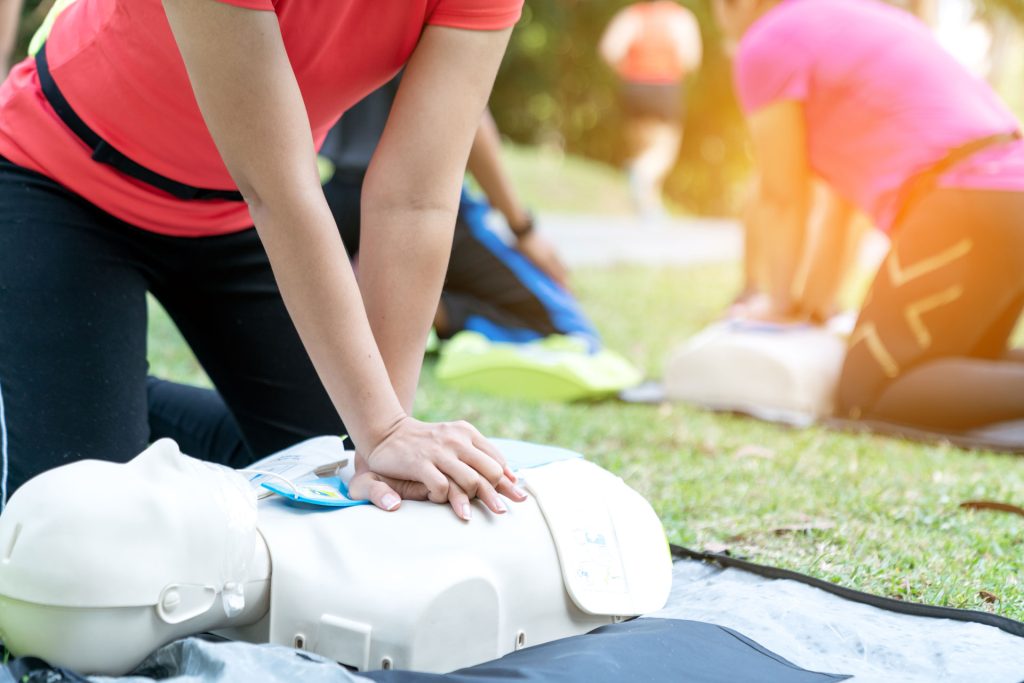
You will certainly kneel on the floor and carry out upper body compressions. You will swap functions with a partner to practice rescue breathing. You will replicate situations for asthma strikes, allergies utilizing sugar pill auto‑injectors, and back precautions.
In express child care first aid training, there is an extra focus on baby and kid CPR, choking in youngsters, febrile convulsions, and childcare‑specific reporting requirements. An express child care first aid course needs to line up with neighborhood regulations for very early childhood services, so it frequently feels more in-depth than a basic first aid course even in a fast format.
Assessments throughout a fast first aid course or fast cpr course commonly include:

- observed CPR on adult and infant manikins for a minimum number of compressions correct use of a computerized exterior defibrillator (AED) demonstration of bandaging, slings, and stress techniques scenario based problem resolving under time pressure
If the course is truly "express" in seat time, you should expect that the on the internet work is not optional. Avoiding it and hoping to shore through on the day is a dish for frustration.
The genuine advantages: more than simply conserving time
Time cost savings are evident, yet the much deeper advantages of well‑designed fast first aid courses show up later on, on quieter days.
One of the strongest advantages is rep over a longer arc. When an organisation uses shorter fast first aid training blocks and fast cpr refresher courses, they can arrange updates a lot more regularly. Skills like CPR degeneration remarkably quickly; studies suggest that chest compression depth and rate degrade within a few months without practice.
With routine, brief refreshers, team see the product more often, even if each direct exposure is brief. An office that runs a complete first aid and cpr course as soon as every three years often creates people who bear in mind "something about 30 compressions" yet wait on the details. An office that uses annual express cpr courses or a fast cpr refresher course usually generates -responders that really feel much more certain with the sequence.
Another benefit is emotional: ease of access signals top priority. When a business buys a fast first aid course that is very easy to attend, they send a message that first aid belongs to normal procedures, not an added problem. People are more likely to offer when they see associates relocating with fast first aid courses without it thwarting their week.
There is also a cost angle. Much shorter on‑site hours can imply reduced location prices, much less time far from core duties, and easier rostering. That does not immediately justify a program, yet it typically makes the difference in between running first aid and cpr training classes internally and outsourcing them irregularly.

For people, a fast first aid course provides a workable method to gain or restore a first aid certificate when life is crowded. A moms and dad, carer, or student could just never publication a two‑day course, but will happily devote to an evening express first aid course if it is nearby.
Where fast layouts can fall short
I have seen fast first aid courses that left individuals energised and capable, and others that left them looking blankly when asked to remember standard actions by the end of the day. The surface product packaging can look the same. The difference is typically in exactly how suppliers bargain the trade‑off between speed and depth.
Here are the primary failure factors I see when rate is pushed also hard:
- Overloading the on-line element with dense, text‑heavy concept, after that hurrying functional work due to the fact that everyone is tired. Allowing participants to avoid or skim the pre‑course needs, turning the course into an uphill struggle for both fitness instructor and learner. Reducing circumstance method to a fast demo as opposed to allowing people chat through what they discover, what terrifies them, and just how they may respond. Treating evaluation as a tick‑and‑flick exercise instead of a chance to deal with method and embed habits. Ignoring various discovering styles. Some people soak up procedures well via reading, others require to speak and move. A totally on-line fast first aid course that uses no in‑person technique is generally insufficient for beginners; it might work only as a theory refresher, and even then with limits.
Fast formats magnify inadequate training. In a long course with an unskilled fitness instructor or a plain script, there is still time to recoup. In a compressed express first aid course, there is much less area to repair misunderstandings.
If you ever before walk out of fast first aid or fast cpr training sensation extra baffled than when you strolled in, that course has failed you.
Matching course type to your real‑world risks
For a white-collar worker who mainly encounters paper cuts, a general first aid and cpr course with a fast delivery style may be ample. For a child care instructor, a straightforward fast first aid course focused on workplaces in general may miss out on crucial subjects such as bronchial asthma administration strategies, head injuries in young children, and guidance throughout outdoor play.
The right layout depends on your setting and responsibilities.
An express child care first aid course makes sense any place you are responsible for babies and young children: early learning centres, after‑school care, getaway care, neighborhood playgroups, or even large household day care setups. Express child care first aid courses normally invest even more time on allergies, choking in youngsters, and child‑specific CPR ratios, and they incorporate paperwork demands from child care regulations.
For health and fitness specialists, such as personal fitness instructors or sports trains, fast cpr courses emphasising heart events, exertion‑related collapse, and fast AED use are typically critical. Some carriers incorporate these right into sports‑focused first aid courses, once more utilizing a fast style that lets a whole group or coaching team train together.
In higher‑risk offices like building and construction or production, a fast first aid course can still function, yet just if it acknowledges certain threats: crush injuries, electric cases, drops from height. A common low‑risk course supplied quickly will not prepare employees for the injuries they are actually most likely to see.
When you look at a supplier's summary, check Cannon Hill first aid courses that the material is not just "first aid and cpr" as a whole, but particularly pertinent to your world.
What to seek in a fast first aid provider
Even people that work in safety and security functions confess that first aid training quality differs extensively. 2 "express first aid courses" can use the very same tag and deliver very different outcomes.
When you are selecting in between programs, a short list can assist:
- Accreditation and acknowledgment: Is the service provider recognised by the relevant authority in your area, and will the first aid certificate stand for your industry or governing body? Delivery mix: Does the course clearly explain just how much time is on-line, just how much remains in person, and what is analyzed in person (especially for CPR training)? Trainer experience: Can you see information concerning that really shows the first aid and cpr course, not just the organisation's name? Group dimension: How many individuals per instructor in functional sessions, and how many manikins are readily available? Crowded spaces waste your time. Post course support: Are there choices for a fast cpr correspondence course or quick practice sessions in between official renewals?
If you are reserving a fast first aid course near you for a group, ask direct questions. The length of time on the floor for CPR? The number of situations? What occurs if someone struggles with the compressions or feels literally incapable to do them at the standard depth? A serious provider answers without defensiveness.
Making fast training stick: what students can do
Fast first aid courses placed a lot more responsibility on students to prepare and evaluate. The benefit is that you have extra control over just how much you leave the program.
Treat the on the internet pre‑course job as part of the training, not an optional additional. If the service provider approximates 3 hours, spread it throughout a couple of nights. Keep in mind in your own words. Stop the videos and imagine yourself doing the steps.
During the face‑to‑face component, withstand need to hang back politely. Volunteer to go initially in circumstances, even if you really feel clumsy. Ask the uncomfortable inquiries about things that stress you, such as "What happens if I damage a rib throughout CPR?" or "What happens if a moms and dad refuses aid for their youngster?".
After you obtain your first aid certificate, timetable your own technique. You might not have manikins in the house, however you can talk via circumstances with family or coworkers. Agree on who calls for aid, who fetches the first aid kit, who fulfills the ambulance. In a childcare setup, some centres integrate short role‑plays right into staff conferences, turning express child care first aid training from a once‑a‑year event into a continuous habit.
If your workplace supplies express cpr courses or short refresher courses in between formal revivals, treat them as non‑negotiable. Ten minutes of compressions on a manikin every couple of months will certainly maintain your strategy much sharper than a solitary, heroic burst of method every three years.
When much longer courses are still worth it
Speed is attractive, but it is not constantly the ideal choice. Some circumstances require even more immersion, even more reflection, and more responses than an express course can reasonably provide.
If you are stepping into an assigned first aid police officer duty in a high‑risk work environment, or you are all new to any type of kind of wellness or safety and security training, a full‑day or multi‑day first aid and cpr course can supply even more breathing room. Individuals that fear, easily bewildered, or that have language obstacles in some cases gain from a slower pace with more time for questions.
Advanced programs such as fap first aid (or comparable sophisticated office feedback courses) usually can not be decreased to a brief express layout without shedding necessary depth. These courses cover extensive assessment, oxygen therapy, advanced air passage monitoring, and in some cases remote or wild circumstances. They presume a baseline of experience that a fast first aid course for beginners can not provide.
There is also a cultural facet. In some teams, investing a full day with each other on first aid training comes to be a common experience that constructs count on. They chat much more honestly about exactly how they react under stress, that is likely to ice up, and just how they can sustain each other. A string of fast first aid courses for spread people might not create that exact same bond.
The secret is not to worship speed yet to match the course layout to the obligations, dangers, and individuals involved.
The future of fast first aid and CPR training
Over the last decade, first aid and cpr training classes have actually moved progressively toward combined knowing: online theory plus face‑to‑face functional work. That pattern will certainly proceed, and fast first aid courses rest at the sharp end of it.
New systems can record compression depth and rate extra properly. Situations can be substitute with more realism. Some providers currently make use of brief video refreshers linked to your initial express first aid course, nudging you to assess essential actions at established intervals.
The inquiry for organisations and people is not whether this change is excellent or negative in the abstract. It is whether the particular fast first aid courses and first aid pro Logan fast cpr courses they choose support the core objective: making even more people eager to act when a stranger stops breathing, an associate collapses, or a youngster chokes.
If rate offers that purpose, it is a present. If it undermines it, it is a responsibility wrapped in convenience.
Bringing speed and safety and security together
On a useful degree, one of the most reliable programs I see share a couple of attributes, regardless of how they are branded:
They respect time without pretending discovering is immediate. They make use of on the internet components for history, then protect in‑person time for practice, adjustment, and questions. They structure express first aid courses so that also in a short session, individuals get their hands on the devices and go through practical events.
They line up fast first aid training with the details globe of the student: an express childcare first aid course for educators, a portable work environment first aid and cpr course for workplace groups, or focused fast cpr training for physical fitness specialists and safety staff.
They treat the first aid certificate not as a goal but as a checkpoint. There is a prepare for refreshers, whether that is an annual fast cpr correspondence course, brief toolbox talks, or informal practice in group meetings.
Most importantly, they always remember that in the end, a fast first aid course is just effective if, at 3am in a peaceful residence or on a busy Monday morning in a storage facility, a single person really feels just confident sufficient to progression, kneel next to a person in problem, and begin.